

Pain au Levain
Mijn basisrecept voor brood, makkelijk recept dat altijd lukt met een zacht kruim, knapperige korst en milde smaak. English translation available.

English translation below
Regelmatig bak ik brood, meestal twee keer per week. Soms vaker maar het ligt eraan hoe druk ik ben. Ik vind het leuk om verschillende soorten meel uit te proberen, bijvoorbeeld rogge, boekweit of emmermeel. Ook test ik af en toe recepten maar er is een recept waar ik altijd op terug val. Het lukt altijd en de smaak is geweldig!
Het is mijn basisrecept en het is gebaseerd op het recept Pain au Levain1 uit het boek Bread van Jeffrey Hamelman. Je kunt met dit recept variëren door ingrediënten aan te passen en door meer of minder levain te gebruiken, kun je het tijdschema beïnvloeden.
Het recept wijkt af van de meeste recepten die je online vindt. Ik gebruik voor het deeg namelijk een stevige starter (stiff levain). De hydratatie is ongeveer 60%. Het deeg heeft ook een lage hydratatie, ongeveer 66%. Daardoor is het deeg goed hanteerbaar. Wat verder opvalt, is het hoge percentage levain dat door het deeg gaat. Het fermenteren gaat daardoor snel. Hamelman heeft twee versies in zijn boek opgenomen. Eentje waarin je de levain in 3 stappen bouwt, handig als je een 100% gehydrateerde starter hebt en waarvan je een stevige levain maakt. En dit recept met 1 stap voor de levain. Het resultaat is een heerlijk brood met een knapperige korst en een open kruim.
Ik heb er een voorbeeld tijdschema aan toegevoegd en de hoeveelheden aangepast zodat je één brood kunt bakken. Hamelman bakt het brood nog dezelfde dag maar ik vind het fijn om ’s ochtends een vers en knapperig brood te hebben. Daarom zet ik het deeg ’s avonds in de koelkast en bak ik het brood de volgende dag.
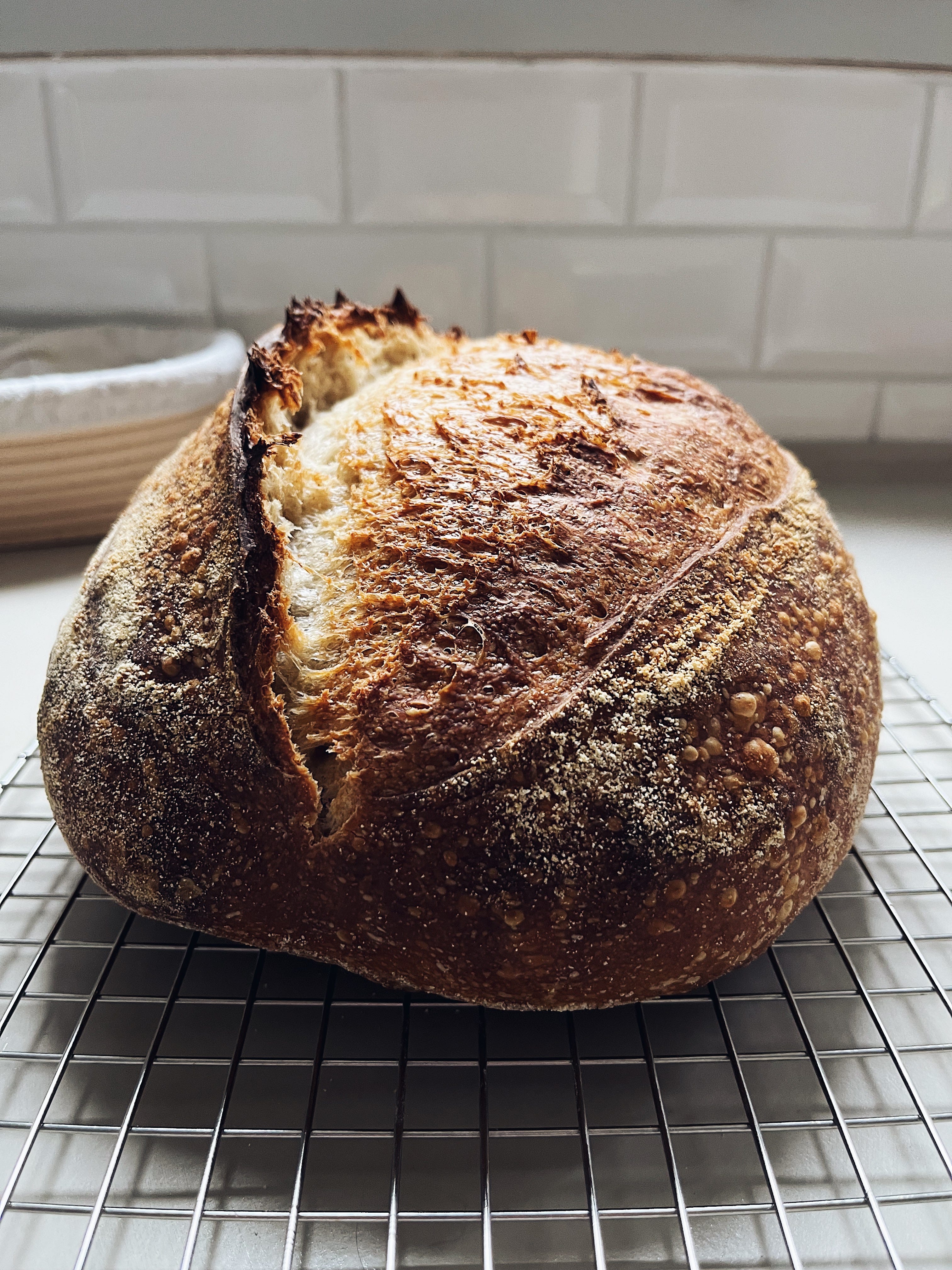
Basisrecept voor zuurdesembrood
Brood met een milde smaak, een zachte kruim en knapperige korst.
DIT HEB JE NODIG
Voor de levain
20 g stevige starter
60 g warm water
95 g Franse tarwebloem T65
5 g volkoren roggemeel
Voor het brood
475 g Franse tarwebloem T65
25 g volkoren roggemeel
330 g en 10 g water
10 g zout
165 g stevige levain
ZO MAAK JE HET
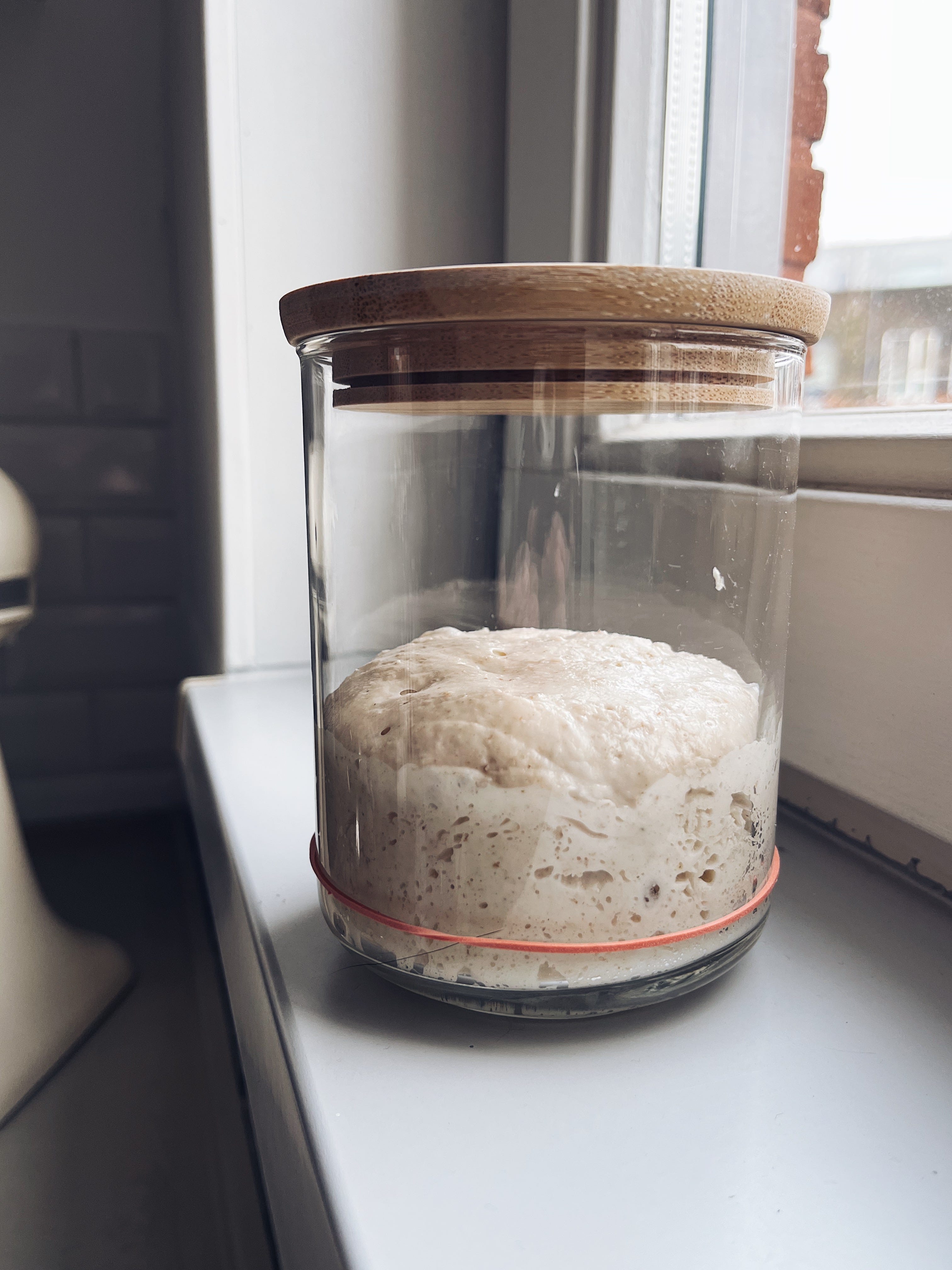
Levain
Neem 20 g starter en meng met 60 g warm water (ongeveer 30°C), 95 g Franse tarwebloem T65 en 5 g volkoren roggemeel. Kneed het goed en zet op het aanrecht. Laat 12-16 uur staan.Autolyse
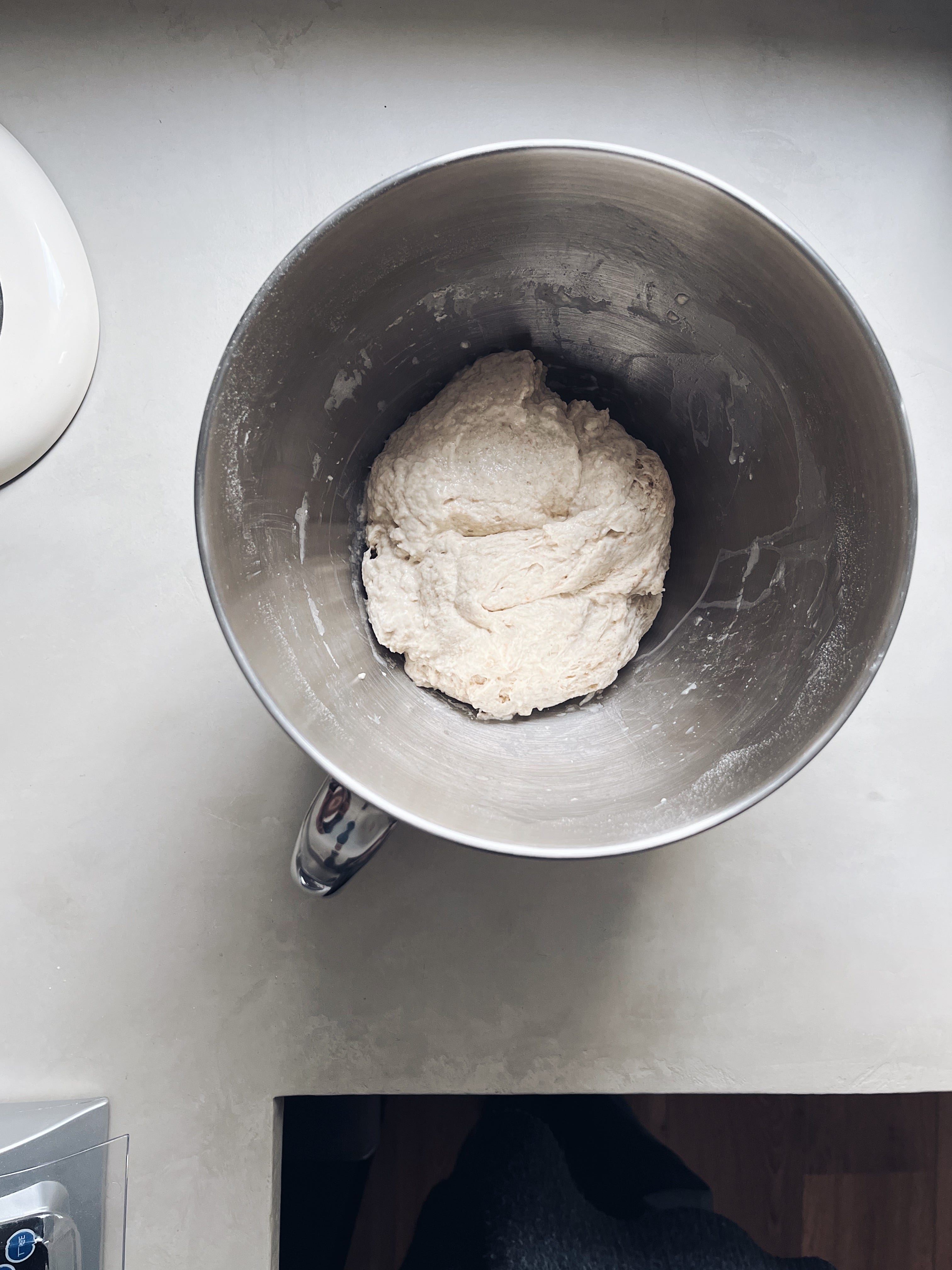
Doe 475 g Franse tarwebloem T65, 25 g roggemeel en 330 g warm water (ongeveer 30°C) in de kom van de mixer. Gebruik de deeghaak en mix op de laagste stand tot het water en het meel goed zijn gemengd en er geen droge delen meer zichtbaar zijn. Dek de kom af met een theedoek of douchemuts, zet op een warme plek en laat 1 uur staan.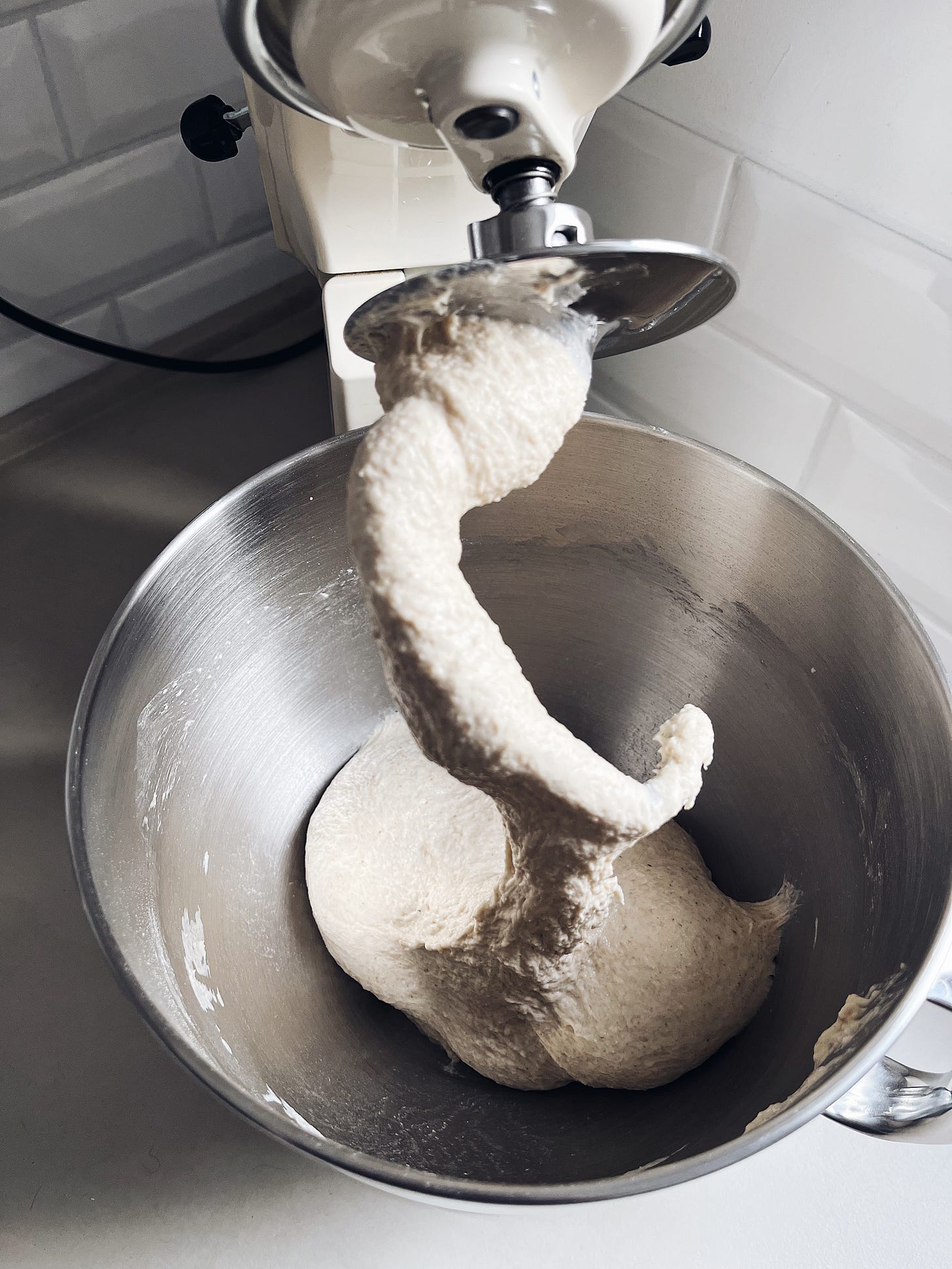
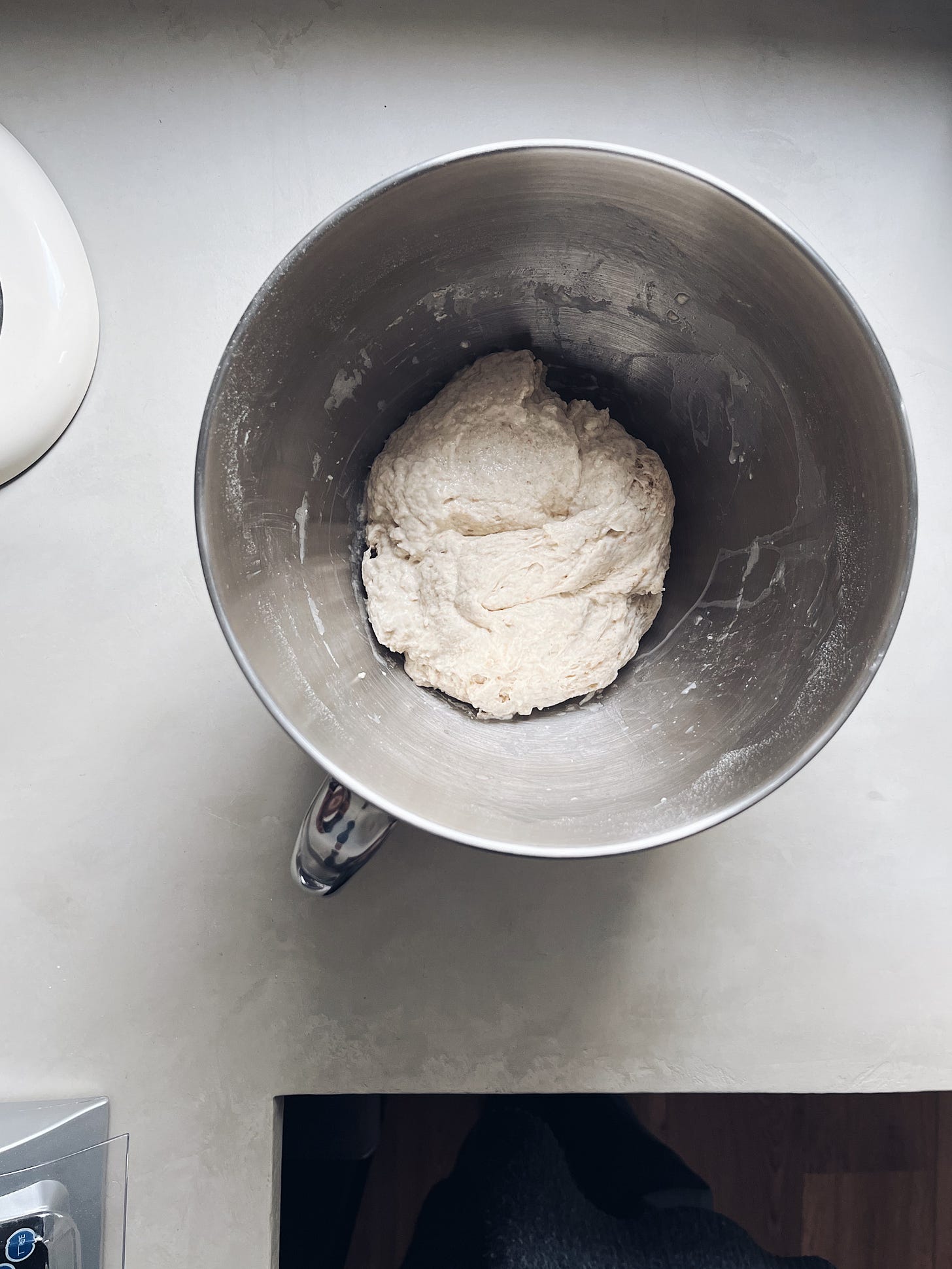
Bulk fermentation
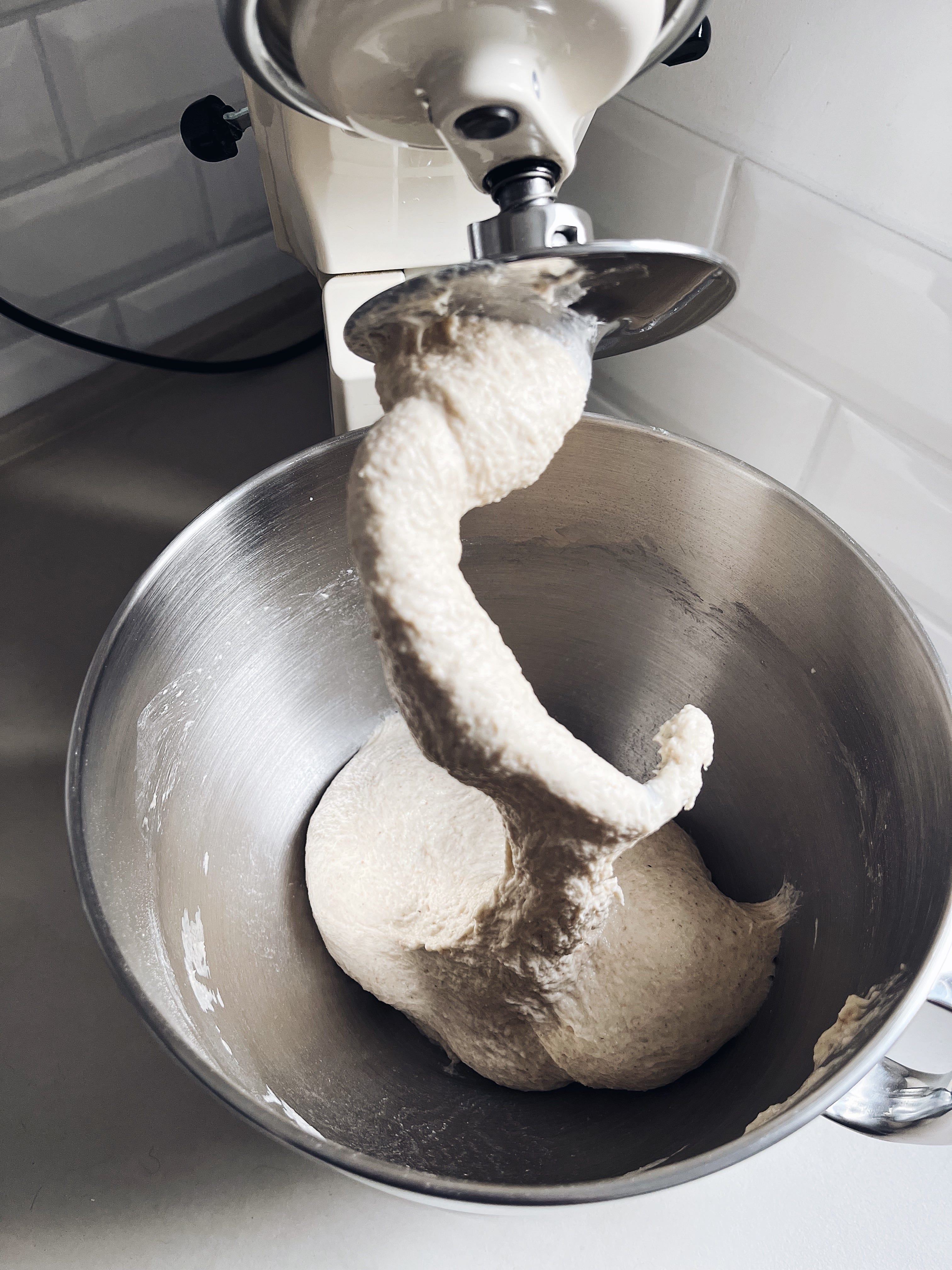
Voeg dan het zout en het resterende 10 g water toe. Mix het zout door het deeg. Doe 165 g levain erbij en laat de mixer 2 minuten op stand 2 draaien. Dek de kom af en zet op een warme plek. Laat 1 uur rusten.
De 15 g levain die overblijft, kun je verversen en als starter gebruiken.
Doe je eerste stretch & fold. Maak je hand nat, steek hem aan de zijkant onder het deeg en pak een stuk deeg vast. Trek het omhoog en leg op de rest van het deeg. Draai je kom een kwartslag en herhaal. Aan het einde is het deeg los van de zijkant van de kom en ligt er in het midden een deegbal. Laat het deeg weer 1 uur rusten.
Doe je tweede stretch & fold of coil folds. Meestal ga ik nu over op coil folds. En laat weer 1 uur rusten.
Herfst/winter
Derde stretch & fold of coil folds. Weer een uur rust.Preshape
In de lente en zomer duurt de bulk fermentatie ongeveer 3 uur. Tijdens de herfst- en wintermaanden heb je meestal een uur extra nodig. Als het deeg genoeg is gefermenteerd, dan kun je het vormen voor het rijsmandje. Bepalen of de bulk fermentatie klaar is, is voor beginners lastig in te schatten. Als het goed is, heb je gevoeld dat het deeg tijdens de bulk fermentatie is veranderd.
De signalen waar ik op let:
• Het deeg is minder plakkerig
• Het is ongeveer 30% gerezen
• Er zijn bellen en blaasjes te zien
• Bij de laatste coil folds blijft het deeg goed in vorm
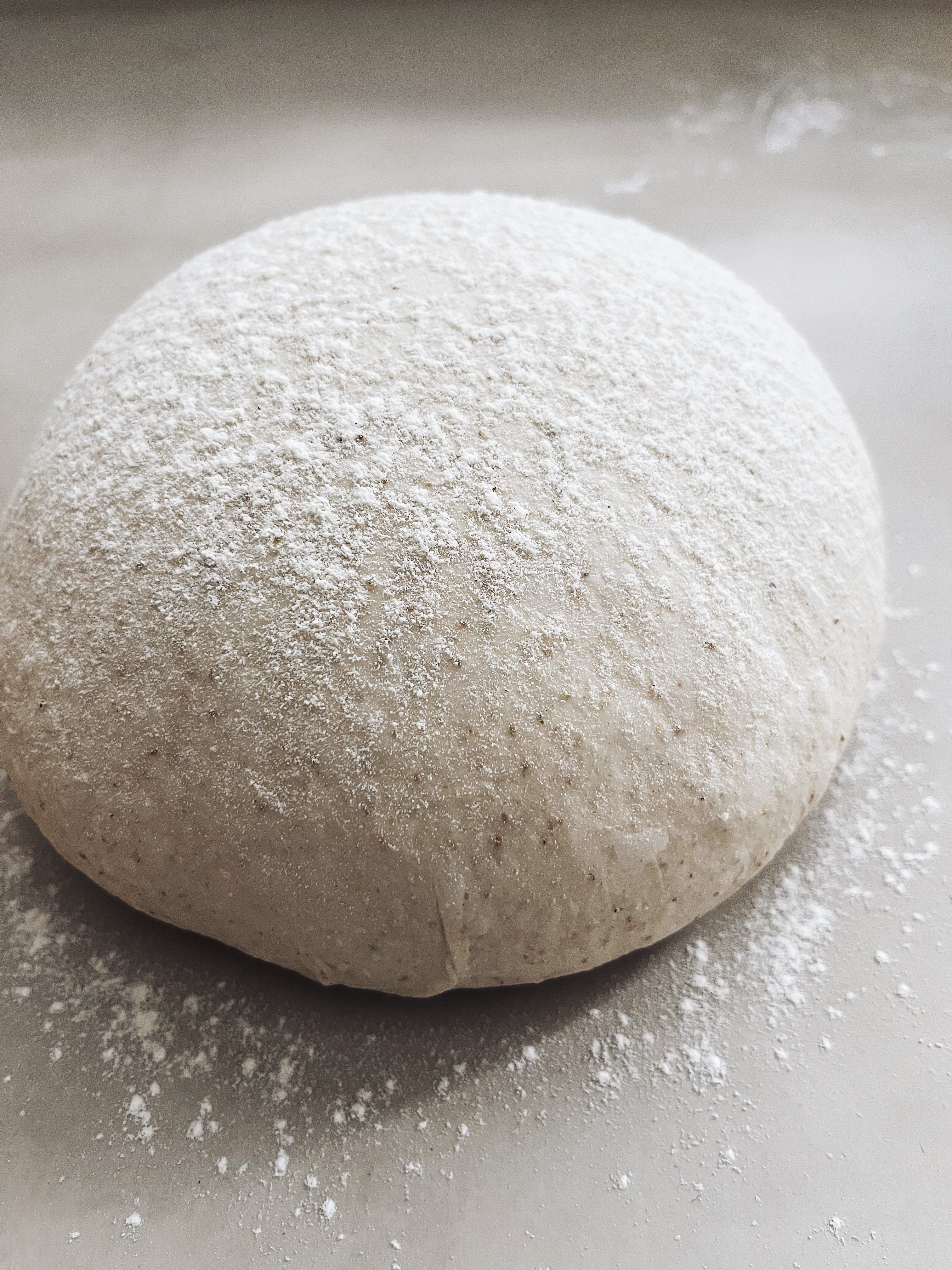
Doe je laatste coil fold, til het deeg uit de kom en leg het op een met bloem bestoven werkblad. Vorm er met je handen een boule. Bestuif de bovenkant heel licht met bloem. Laat 30 minuten rusten.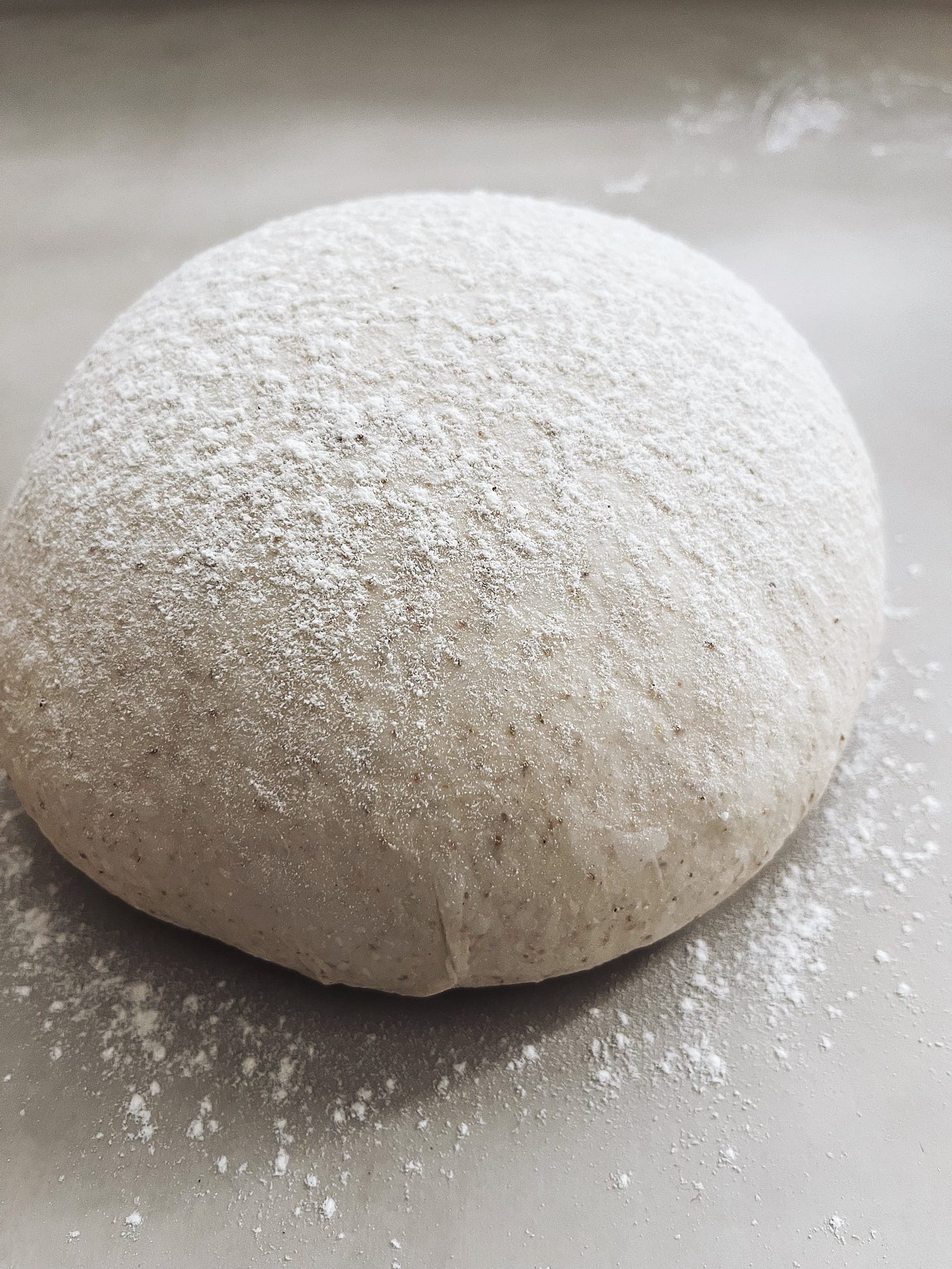
Final shape
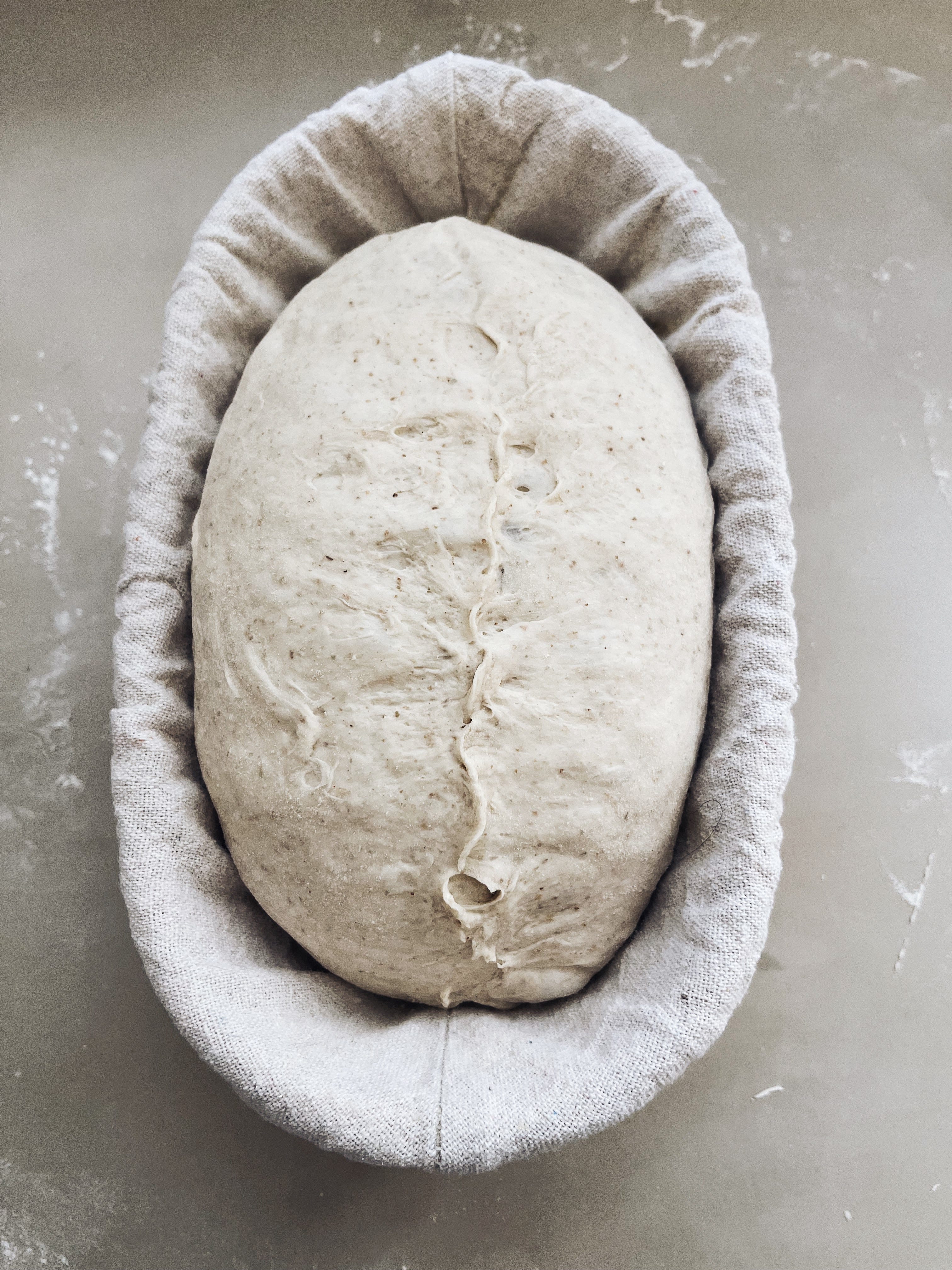
Bestuif je rijsmandje met rijstemeel. Steek je deegmes of -schraper onder het deeg en draai het in één beweging om. Vouw de zijkanten naar binnen en rol vanaf boven het deeg naar beneden op. Leg het deeg in het rijsmandje en dek af. Zet in de koelkast tot de volgende ochtend. De ideale temperatuur van de koelkast is 4°C.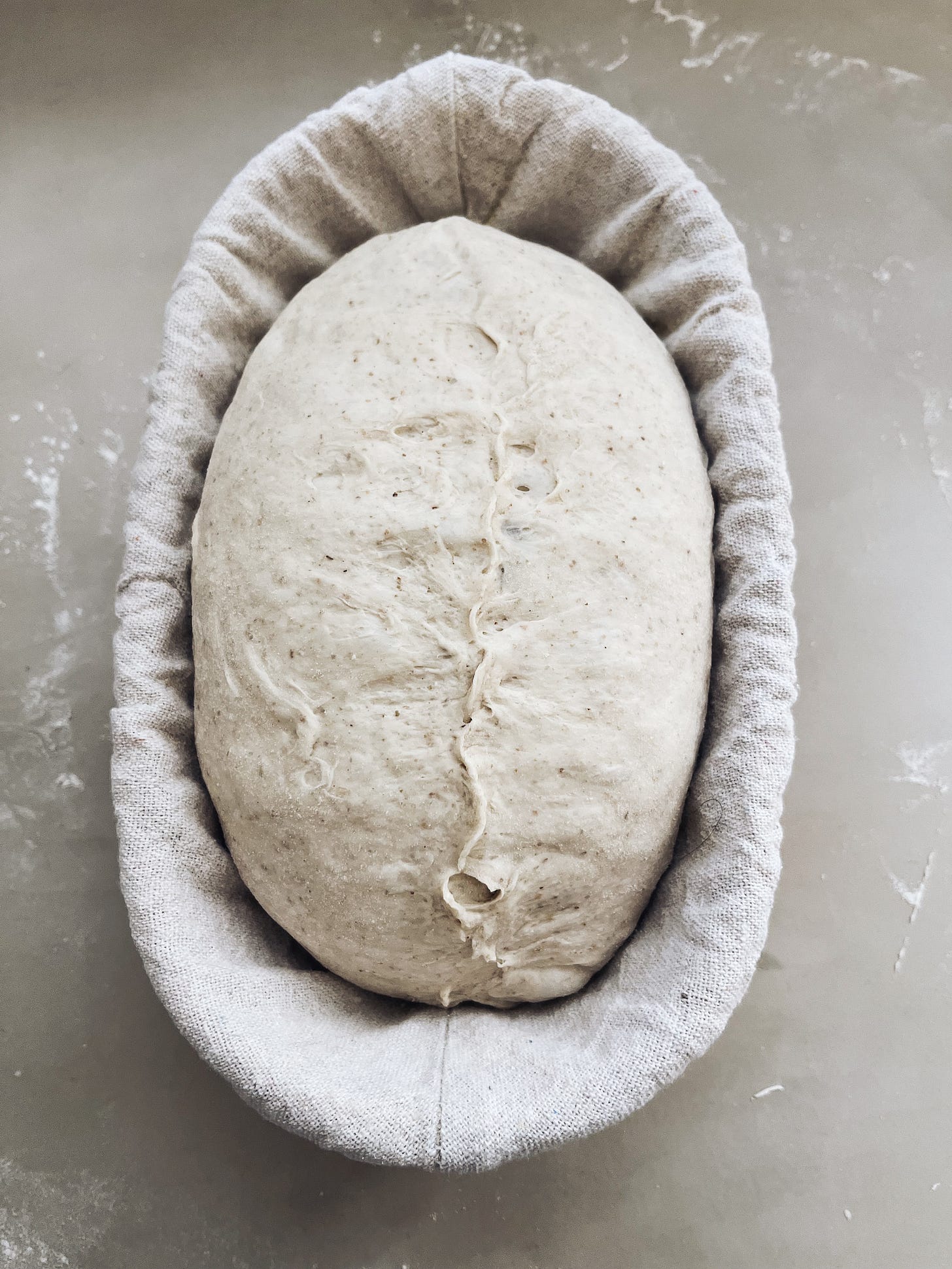
Insnijden en bakken
Zet de schaal of gietijzeren pan met deksel in de oven en verwarm de oven op 250°C. Door de hoge kosten voor energie experimenteer ik een beetje met de tijd. Ik verwarm 25 minuten voor. Haal het rijsmandje uit de koelkast en zet 25 minuten in de vriezer. Heel koud deeg snijd makkelijker in.
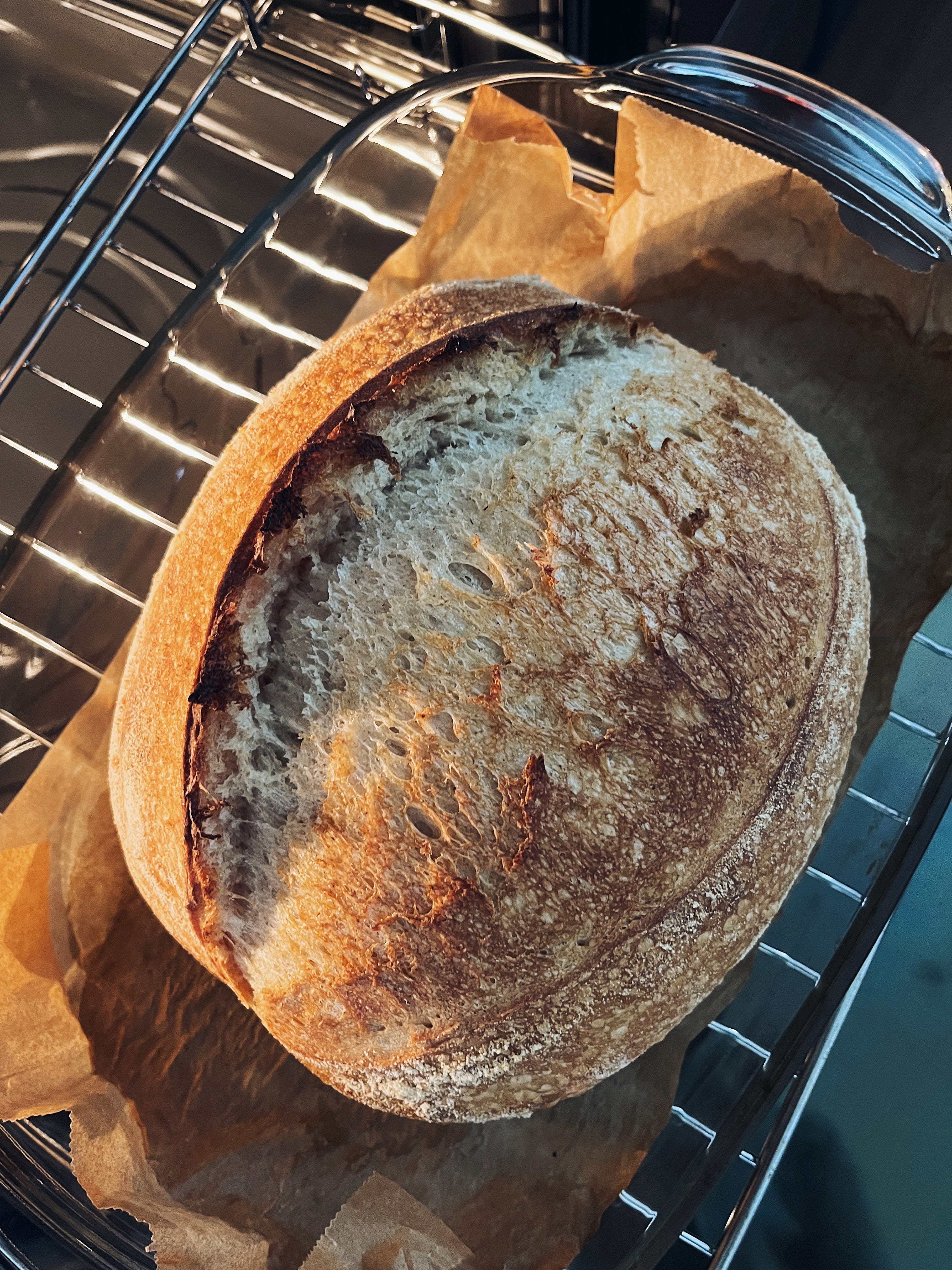
Als de oven en schaal op temperatuur is, haal je schaal uit de oven. Haal het deeg uit de vriezer en stort het deeg op een vel bakpapier. Snijd het deeg in een snelle en krachtige beweging in. Til het bakpapier met deeg op, leg in de schaal en sluit met de deksel. Zet in de oven en bak 25 minuten op 250°C. Haal dan de deksel eraf, verlaag de temperatuur naar 230°C en bak 15 minuten voor een bruine korst.
Haal het brood uit de schaal en laat op een rooster afkoelen. Het brood gaart nog na en weersta de verleiding om het aan te snijden. Wacht tot het helemaal is afgekoeld. Door eerder aansnijden, wordt het brood klef.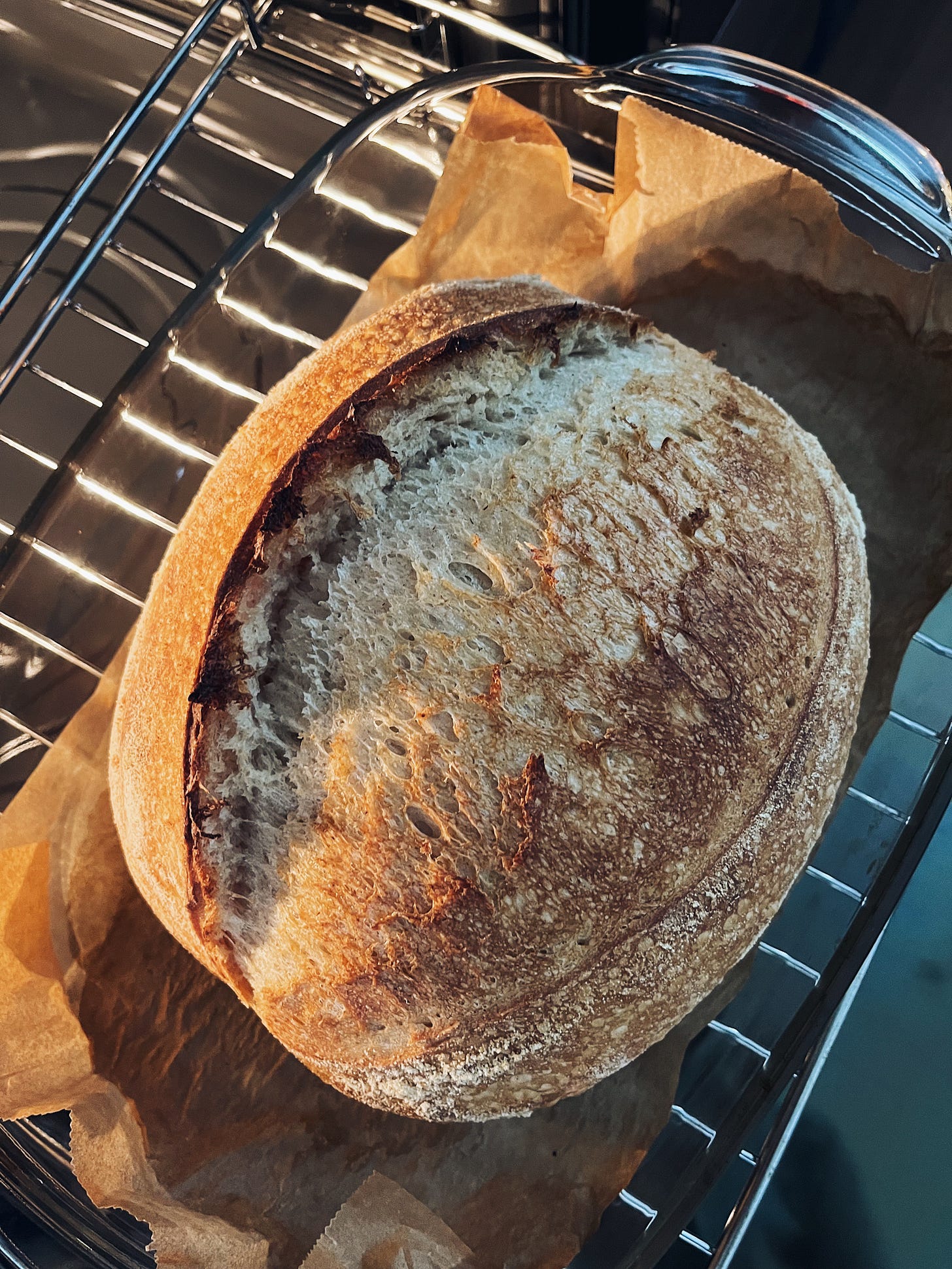
Na 25 minuten bakken, het moment dat de deksel eraf kan
Voorbeeld tijdschema
Dag 1
10.00 uur ververs de starter
22.00 uur maak de levain
Dag 2
12.00 uur autolyse
13.00 uur start bulk fermentation
Lente/zomer
16.00 uur preshape
16.30 uur final shape
Herfst/winter
17.00 uur preshape
17.30 uur final shape
Dag 3
09.00 uur oven voorverwarmen
09.30 uur bakken
Tijdens warm weer in de lente en zomer duurt bulk fermentatie ongeveer 3 uur. In de herfst en winter is meestal 4 uur nodig.
English
This is my recipe that I use as a base for my bread. It is based on the recipe Pain au Levain from the book Bread by Jeffrey Hamelman. You can vary this recipe by adjusting ingredients and by using more or less levain you can influence the time schedule.
The recipe differs from most recipes that you find online. I use a stiff starter for the dough. The hydration is about 60%. The dough also has a low hydration, about 66%. This makes the dough easy to handle. What is also noticeable is the high percentage of levain that goes through the dough. This makes the fermentation go quickly. Hamelman has included two versions in his book. One in which you build the levain in 3 steps, handy if you have a 100% hydrated starter and from which you make a firm levain. And this recipe with 1 step for the levain. The result is a delicious bread with a crispy crust and an open crumb.
I added a sample timetable and adjusted the quantities so that you can bake one loaf. Hamelman bakes the bread the same day, but I like to have a fresh and crispy loaf in the morning. That's why I put the dough in the fridge in the evening and bake it the next day.
INGREDIENTS
For the levain
20 g stiff starter
60 g warm water
95 g French wheat flour T65
5 g wholemeal rye flour
For the bread
475 g French wheat flour T65
25 g wholemeal rye flour
330 g and 10 g water
10 g salt
165 g stiff levain
DIRECTIONS
Levain
Take 20 g starter and mix with 60 g warm water (about 30°C/86°F), 95 g French wheat flour T65 and 5 g wholemeal rye flour. Knead well and place on the counter.Autolyse
Put 475 g French wheat flour T65, 25 g rye flour and 330 g warm water (about 30° C/86°F) in the bowl of the mixer. Use the dough hook and mix on first speed until the water and flour are well mixed and no dry parts are visible. Cover the bowl with a tea towel or shower cap, put in a warm place and let it sit for an hour.Bulk fermentation
Then add the salt and the remaining 10 g water. Mix the salt through the dough. Add 165 g levain and mix on second speed for 2 minutes. You can refresh the 15 g levain that remains and use it as a starter. Cover the bowl and place in a warm place.
Do your first stretch & fold. Wet your hand, stick it under the dough on the side and grab a piece of dough. Pull it up and place it on the rest of the dough. Turn your bowl a quarter turn and repeat. At the end, the dough will be loose from the side of the bowl and there will be a dough ball in the middle. Let the dough rest for an hour.
Do your second stretch & fold or coil fold. I usually switch to coil folds at this point. And let it rest for another hour.
Fall/winter
Third stretch & fold or coil fold. Another hour of rest.Preshape
In spring and summer, bulk fermentation takes about 3 hours. During the fall and winter months, you usually need an extra hour. When the dough has fermented enough, you can shape it for the rising basket. Determining whether the bulk fermentation is ready is difficult for beginners to estimate. If it is good, you will have felt that the dough has changed during the bulk fermentation.
The signals I look for:
• The dough is less sticky
• It has risen about 30%
• There are bubbles and blisters visible
• During the last coil folds, the dough keeps its shapeDo your last last coil fold, lift the dough out of the bowl and place it on a floured work surface. Shape it into a boule with your hands. Lightly dust the top with flour. Let it rest for 30 minutes.
Final shape
Dust your rising basket with rice flour. Insert your dough knife or scraper under the dough and turn it over in one movement. Fold the sides inwards and roll the dough from the top downwards. Place the dough in the banneton and cover. Place in the refrigerator until the next morning. The ideal temperature of the refrigerator is 4°C/39°F.Score and bake
Place the dish or cast iron pan with lid in the oven and preheat the oven to 250°C/482°F. Due to the high energy costs, I experiment a bit with the time. I preheat for 25 minutes. Remove the banneton from the refrigerator and place in the freezer for 25 minutes. Very cold dough is easier to score.
When the oven and dish are at temperature, remove the dish from the oven. Remove the dough from the freezer and pour the dough onto a sheet of baking paper. Score the dough in a quick and powerful movement. Lift the baking paper with dough, place in the dish and close with the lid. Place in the oven and bake for 25 minutes at 250°C/482°F. Then remove the lid, lower the temperature to 230°C/446°F and bake for 15 minutes for a brown crust. Remove the bread from the dish and let it cool on a rack. The bread will continue to cook, so resist the temptation to cut it. Wait until it has completely cooled. Cutting it too early will make the bread soggy.
Sample Timetable
Day 1
10:00 am refresh starter
10:00 pm make levain
Day 2
12:00 pm autolyse
1:00 pm start bulk fermentation
Spring/summer
4:00 pm preshape
4:30 pm final shape
Fall/winter
5:00 pm preshape
5:30 pm final shape
Day 3
09:00 am preheat oven
09:30 am bake
During warm weather in spring and summer, bulk fermentation takes about 3 hours. In fall and winter, it usually takes 4 hours.
Hamelman J. (2021). Bread: a baker's book of techniques and recipes. Wiley.